
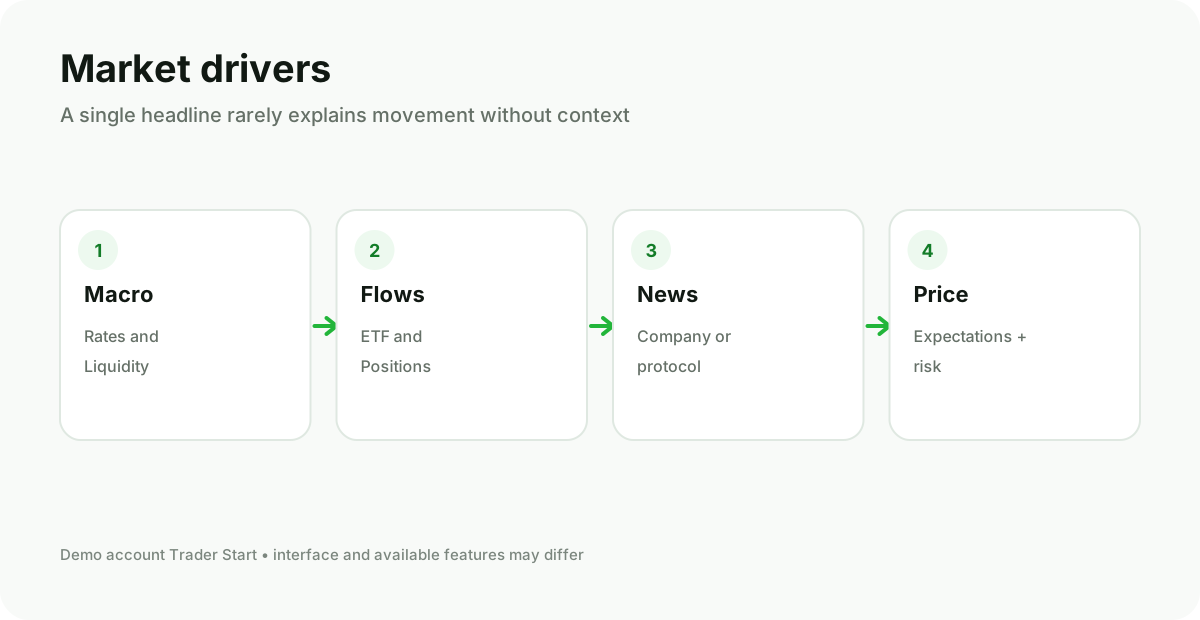
Expectations matter more than the headline
Market participants embed forecasts for revenue, earnings, rates, and demand into the price in advance. After the event, the price adjusts depending on how much reality deviates from the already priced‑in scenario.
Five main groups of factors
- Fundamental results: sales, profit, margin, cash flow and forecast.
- Interest rates: change the cost of capital and the current valuation of future cash flows.
- Corporate events: transactions, stock issuance, buybacks, dividends, management changes, and regulation.
- Industry and economy: demand, commodity prices, currencies, cycle, and competition.
- Positioning and liquidity: fund flows, options, short positions and forced closure of trades.
Why good news sometimes doesn't help
If the price had been rising for a long time before the release, the positive could have already been priced in. To sustain the company's upside, it needs not only to meet the forecast but to beat expectations and convincingly raise the valuation of future results.
Different horizons
Within the day, news, order flow, and technical levels can dominate. Over a multi‑quarter horizon, profit, cash flow, competitive position, and cost of capital usually carry greater weight.
How to dissect a move
- Identify the original event and the primary source;
- Compare the fact with expectations;
- Check the sector and index movement;
- Assess the volume and prior positioning;
- Do not explain each candle with a single convenient reason.
Related material: How to read company financial statements.