
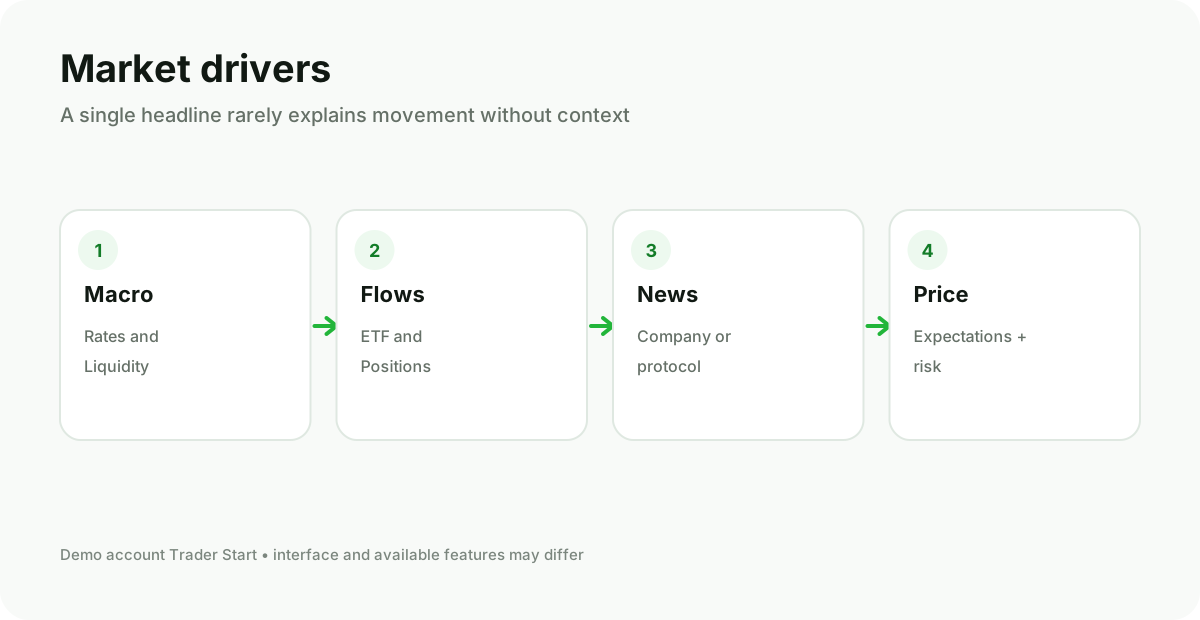
Global liquidity
Rate expectations, bond yields, dollar dynamics, and risk appetite affect capital availability. During periods of tightening financial conditions, speculative assets often come under pressure, but the relationship is not constant.
Institutional flows
Purchases and sales by large participants, flows into regulated exchange‑traded products, and changes in demand from funds can influence available supply and market sentiment.
Supply and cycle
Bitcoin issuance is limited by the protocol, and the block reward is periodically reduced. However, the reduction of new supply does not set a precise date or magnitude for future movement: the price also depends on demand.
Regulation and infrastructure
Rules for exchanges, custodians, banks, funds, and taxation change participants' access to the market. Technical outages of major venues and counterparty issues can also sharply affect liquidity.
First, understand the mechanics of a crypto exchange
Before registering, get familiar with two-factor authentication, withdrawal networks, fees, custody, and regional restrictions
Crypto assets are volatile; product availability depends on the country
Leverage and liquidations
Futures and perpetual contracts are widely used in the crypto market. A buildup of leveraged positions can amplify price moves when liquidations trigger a cascade of forced buying or selling.
On-chain metrics and flows are useful as part of the context, but on their own they do not guarantee direction or entry timing.