
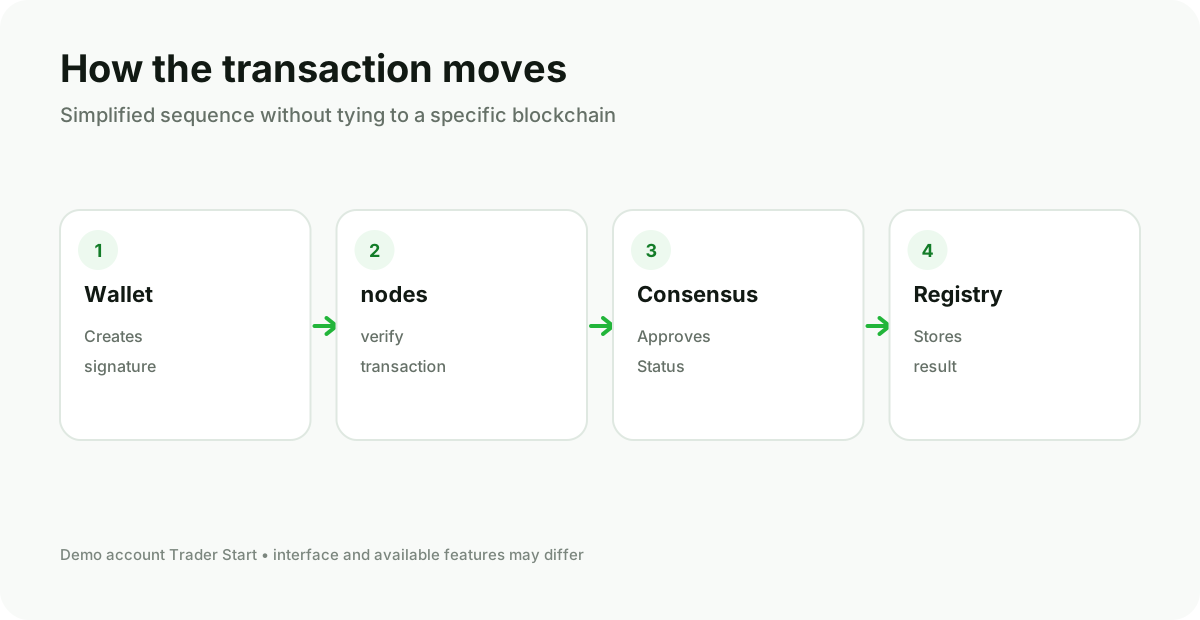
Network and asset are not the same thing
Ethereum provides the infrastructure for smart contracts and applications. ETH is used to pay fees, interact with protocols, and participate in the Proof of Stake mechanism.
Fees and activity
Users pay gas for computation and data storage. The fee level depends on demand for block space. High activity can increase fees, but its impact on ETH price should be considered together with competition, network revenue, and the broader market.
Staking
Validators lock up ETH and participate in block validation. They earn rewards and bear technical and protocol risks, including penalties for misbehavior. Intermediary terms add counterparty risk.
Layer‑2 upgrades and solutions
Protocol changes can affect scaling, fees, and user experience. Layer‑2 networks process a portion of transactions off the main chain and then post data or proofs to Ethereum.
First, understand the mechanics of a crypto exchange
Before registering, get familiar with two-factor authentication, withdrawal networks, fees, custody, and regional restrictions
Crypto assets are volatile; product availability depends on the country
What influences ETH
- overall liquidity and Bitcoin dynamics;
- application activity and commission revenues;
- protocol upgrades and L2 development;
- regulation and access for institutional participants;
- staking volume, issuance and fee burning;
- competition from other networks.
Technological utility of the network does not guarantee asset price appreciation. Always separate protocol usage, ETH economics, and market valuation.