
Three key columns
| Field | What it means |
|---|---|
| Actual / Fact | Published value of the indicator. |
| Forecast / Forecast | Analysts' expectation before publication. |
| Previous / Previous | The value of the previous period, sometimes already revised. |
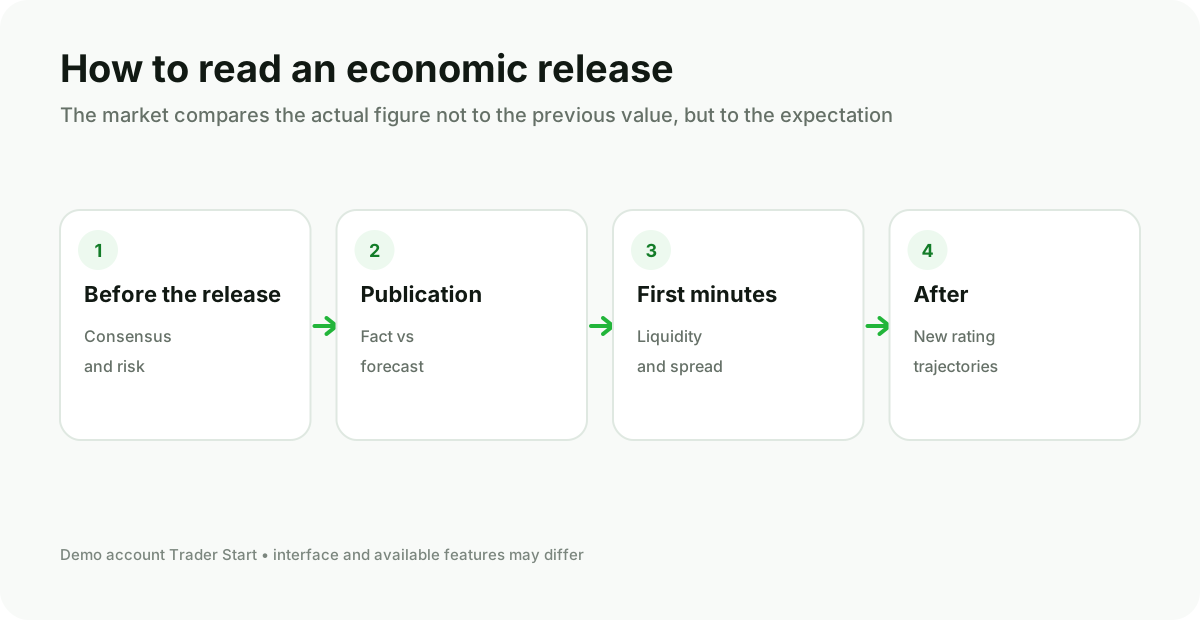
Most often the initial reaction occurs because of the gap between the actual figure and the forecast. But the direction of the move depends on the context: the same strong reading can support a currency if it raises rate expectations, or put pressure on equities if the market fears a tighter central‑bank policy.
Which events are usually important
- CPI and PCE — inflation indicators;
- NFP, unemployment rate and wages — state of the US labor market;
- PMI and ISM — business activity;
- GDP — economic growth rate;
- central bank decisions — rate, statement and press conference;
- retail sales and industrial production — demand and output.
Why revisions are important
Previous data may be revised. Therefore, you need to look not only at the new figure but also at the change in the prior estimate. This is especially important for employment statistics and GDP.
Practical workflow
- Check the calendar's time zone.
- Mark high‑importance events for the traded instrument.
- Record the forecast and the previous value before the release.
- After the release, compare the actual, the forecast, and the revision.
- Do not assess the move based solely on the first candle: the market may change its interpretation after report details or commentary.
During major releases, the spread can widen and execution can deteriorate. If your strategy is not designed for news, decide in advance whether you will reduce the position or stay out of the market.